Author: James Wilkinson
-
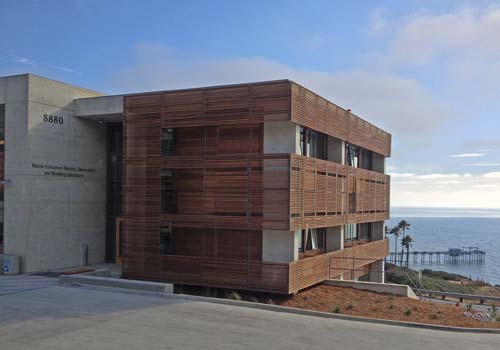
MESOM & SWFSC Labs
Marine Ecosystem Sensing, Observation and Modeling (MESOM) Laboratory at Scripps Institution of Oceanography, University of California San Diego. 8880 Biological Grade, La Jolla, California The Marine Ecosystem Sensing, Observation and Modeling (MESOM) Laboratory at Scripps Institution of Oceanography opened in August 2013. This three-story, 21,300 square feet building has 12 laboratories, 56 offices and three…
-
Picophytoplankton & Prokaryotes
CCE-LTER samples picophytoplankton populations and non-pigmented prokaryotes within the California Current Ecosystem (CCE) are fixed in the field by the addition of paraformaldehyde and, in the laboratory, stained with Hoechst 33342 (a DNA specific dye). The cells are enumerated by an Altra flow cytometer and converted to biomass estimates Complete methods for picoplankton and bacteria…
-
CTD History
CalCOFI CTD HISTORY Summary: CalCOFI officially replaced the 20-bottle hydrowire cast with a Seabird 911 CTD-rosette in August 1993. Starting in Dec 1989, it took three years of testing, development, training, and comparisons to data collected by hydrowire bottle casts to switch over. At that time, CalCOFI performed 20-bottle hydrocasts on 66 stations and daily 6-bottle productivity casts. Since the 20…
-

CalCOFI Data Report Publication Format Index
CalCOFI Data Report Data Description: Line 1, Field 1: Research Vessel Line 1, Field 2: Cruise Name Line 1, Field 3: CalCOFI Line & Station (CalCOFI’s standard line and station values) Line 3, Field 1 – 2: Latitude and Longitude of station at beginning of CTD upcast Line 3, Field 3 – 5: Cast…
-
Salinity
Salinity Determination OVERVIEW: This procedure describes the method for the determination of seawater salinity using a Guildline Portasal™ Salinometer (Model 8410). 1. Principle During a cruise a 24 bottle rosette is used to collect seawater salinity samples of ~225 mL from all bottles closed from pre-designated depths. A Guildline Instruments Portasal™ Salinometer (8410A) makes the precise…
-
Dissolved Oxygen
DISSOLVED OXYGEN SUMMARY: The amount of dissolved oxygen in seawater is measured using the Carpenter modification of the Winkler method. Carpenters modification (1965) was designed to increase the accuracy of the original method devised by Winkler in 1889. Using Carpenters modification, the significant loss of iodine is reduced and air oxidation of iodide is…
-
Data Management
CalCOFI Data Management: Setting Community Standards (presented as a poster at the 2007 CalCOFI Conference by James Wilkinson, Karen Baker & Richard Charter) Introduction CalCOFI represents a partnership of multiple agencies conducting quarterly joint oceanographic cruises. CalCOFI cruise participants work as a cohesive cross-agency unit to accomplish cruise objectives. Ancillary researchers frequently integrate their field…
-
Satlantic ISUS Operation
Setting up and using the ISUS with Seabird CTD 1). Connect the ISUS Analog Out port to a 6-pin CTD port – we use voltage channel 6 on a universal Y-cable, allowing pH to occupy channel 7. Map that port in Seasave as user-polynomial; under the user-polynomial, enter: A0 = – 7.1168, A1 = 27.155. …
-
Contacts
NOAA-CalCOFI is located at: SIO-CalCOFI is located at: NOAA Southwest Fisheries Science Center 8901 La Jolla Shores Dr Marine Ecosystem Sensing, Observation and Modeling (MESOM) Laboratory La Jolla, CA 92037 8880 Biological Grade Phone: (858) 546-7000, Fax: (858) 546-7003 La Jolla, CA 92037 Phone: (858) 534-2888, Fax: (858) 822-0562 Both NOAA-CalCOFI & SIO-CalCOFI…
-
Chlorophyll Methods
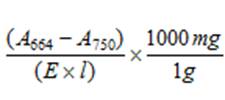
Chlorophyll Determination SUMMARY: Chlorophyll a is extracted in an acetone solution. Chlorophyll and phaeopigments are then measured fluorometrically using an acidification technique. 1. Principle Seawater samples of a known volume are filtered (< 10 psi) onto GF/F filters. These filters are then placed into 10ml screw-top culture tubes containing 8.0ml of 90% acetone.…